

Robotic X-Ray Market Grows at 5.7% CAGR Through 2033 Persistence market Research
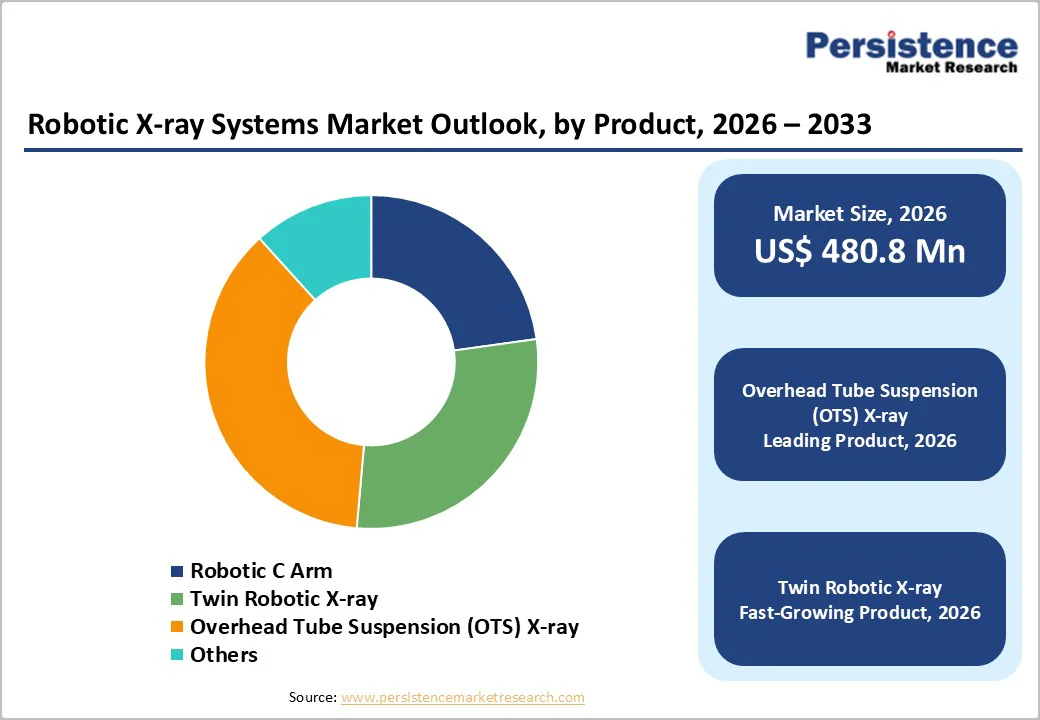
Robotic X-ray Systems Market
The robotic X-ray systems market is expanding, driven by advancements in AI and the need for precise, efficient diagnostic imaging in healthcare settings.
LONDON, UNITED KINGDOM, January 19, 2026 /EINPresswire.com/ -- The global robotic X-ray systems market is set to experience substantial growth, with projections indicating an increase from USD 480.8 million in 2026 to USD 767.9 million by 2033, reflecting a compound annual growth rate (CAGR) of 5.7%. This growth is driven by a strong demand for advanced imaging solutions offering high precision, automated positioning, and improved workflow efficiency in healthcare settings such as hospitals, surgical centers, and trauma units.
Download Your Free Sample & Explore Key Insights: https://www.persistencemarketresearch.com/samples/27298
Key Market Drivers
The growing need for high-quality digital radiography (DR) and advancements in imaging technology are key drivers for the robotic X-ray systems market. Digital radiography allows for sharper images, faster processing, and more efficient workflows, prompting hospitals to replace analog systems. Robotic X-ray systems enhance this transition by providing precise robotic movements, which reduce human error and ensure consistent, operator-independent imaging.
The rise in aging populations and the growing prevalence of chronic diseases, orthopedic injuries, and trauma-related conditions is pushing healthcare providers to adopt systems that can handle increasing patient volumes and deliver consistent imaging. Robotic X-ray solutions address these needs by improving patient positioning, ensuring image accuracy, and increasing throughput.
Market Challenges
Despite the market’s growth potential, several challenges hinder widespread adoption. One major barrier is the high upfront cost of robotic X-ray systems, which can be prohibitive for smaller hospitals or clinics. The total cost of ownership is further increased by installation, staff training, and maintenance. These expenses may delay adoption, particularly in budget-constrained settings.
Additionally, integrating robotic systems into existing healthcare infrastructure is complex and often requires significant adjustments to legacy systems, including PACS and EMR platforms. This integration can extend deployment timelines and raise the overall costs of installation.
Opportunities for Growth
Although there are challenges, the integration of Artificial Intelligence (AI) into robotic X-ray systems is opening new opportunities. AI features such as auto-positioning, dose optimization, and computer-assisted detection are improving diagnostic accuracy and workflow efficiency. Furthermore, remote imaging capabilities are emerging as a significant opportunity, especially in underserved areas. Robotic X-ray systems that can be operated remotely allow for high-quality imaging even in locations with limited medical personnel, thereby addressing workforce shortages and expanding access to care.
Get Custom Insights Designed for Your Business: https://www.persistencemarketresearch.com/request-customization/27298
Regional Insights
North America
North America is expected to lead the robotic X-ray systems market, accounting for nearly half of the global market share. The U.S. is driving this growth due to rapid adoption of advanced imaging technologies, particularly AI-driven systems. The region’s robust healthcare infrastructure and high demand for precision imaging in trauma centers and orthopedic departments are major factors contributing to the increased adoption of robotic X-ray systems.
Asia Pacific
Asia Pacific is poised for the fastest growth, with a projected CAGR of 7.4%. The region’s expanding healthcare infrastructure, particularly in China, India, and Southeast Asia, is fueling demand for advanced imaging systems. Rising patient volumes and increasing government investments in healthcare modernization are key factors driving this growth. Initiatives like China’s tiered healthcare reform and India’s national health programs are accelerating the adoption of digital radiography systems.
Europe
In Europe, the market for robotic X-ray systems is also expanding, driven by the need for high-precision diagnostic imaging. Countries in Western Europe are investing in healthcare infrastructure upgrades, and the region’s aging population is driving demand for more efficient imaging solutions. Regulatory emphasis on radiation safety and imaging efficiency is encouraging hospitals to adopt automated systems.
Product Segmentation
The overhead tube suspension (OTS) X-ray system is expected to dominate the market, accounting for a significant share. These systems are favored for their flexibility, high precision, and ability to handle complex patient positions. OTS systems are ideal for high-volume environments like emergency departments and orthopedic clinics.
The twin robotic X-ray systems segment is anticipated to grow the fastest, driven by advances in automation and multi-angle imaging capabilities, which improve workflow efficiency and patient care in high-throughput settings.
Application Segmentation
Orthopedics is the largest application segment, owing to the high demand for precise imaging in diagnosing fractures, joint replacements, and musculoskeletal conditions. Robotic X-ray systems allow for accurate, repeatable imaging, critical for surgical planning and postoperative monitoring.
The trauma segment is the fastest-growing, driven by the increasing number of emergency care cases. Robotic X-ray systems enable quick, reproducible imaging, which is essential for timely decision-making in high-pressure trauma settings.
End-User Insights
Hospitals are the leading end-users of robotic X-ray systems, accounting for more than half of the market share. Hospitals, with their high patient volumes and broad clinical needs, are well-positioned to invest in robotic X-ray systems that improve efficiency and diagnostic accuracy. Additionally, as hospitals transition toward smart healthcare, the demand for automated imaging solutions is expected to increase.
Checkout Now & Download Complete Market Report: https://www.persistencemarketresearch.com/checkout/27298
Key Companies:
Siemens Healthineers AG
GE HealthCare
Koninklijke Philips N.V.,
Canon Medical Systems Corporation
Carestream Health.
Samsung Healthcare
Shimadzu Corporation
Fujifilm Holdings Corporation
North Star Imaging Inc
Nikon Corporation Industrial Solutions Business Unit
X-RIS srl
Others
Competitive Landscape
These companies are focusing on AI integration, automation, and high-throughput systems to enhance diagnostic accuracy and reduce technician workload. Strategic partnerships, acquisitions, and geographic expansion are key strategies to capture market share, particularly in high-growth regions like Asia Pacific.
Market Segmentation
By Product
Robotic C Arm
Twin Robotic X-ray
Overhead Tube Suspension (OTS) X-ray
Others
By Application
Orthopedics
Surgery
Trauma
By End-user
Hospitals
Specialty Clinics
Ambulatory Surgery Centers
By Region
North America
Europe
East Asia
South Asia and Oceania
Latin America
Middle East and Africa
Read Related Reports:
High Content Screening Market: Global high content screening market to grow from US$1.8 Bn in 2026 to US$2.8 Bn by 2033, registering a 6.7% CAGR driven by drug discovery demand.
North America Wound Debridement Products Market: North America wound debridement products market to grow from US$424.7 Mn in 2026 to US$727.8 Mn by 2033, at a 8.0% CAGR driven by chronic wound care demand.
Persistence Market Research
Persistence Market Research Pvt Ltd
+1 646-878-6329
email us here
Visit us on social media:
LinkedIn
Instagram
Facebook
YouTube
X
Legal Disclaimer:
EIN Presswire provides this news content "as is" without warranty of any kind. We do not accept any responsibility or liability for the accuracy, content, images, videos, licenses, completeness, legality, or reliability of the information contained in this article. If you have any complaints or copyright issues related to this article, kindly contact the author above.
