

Fortified Wine Market Set to Reach USD 22.46 Billion by 2035 as Premiumization and Vermouth Demand Strengthen
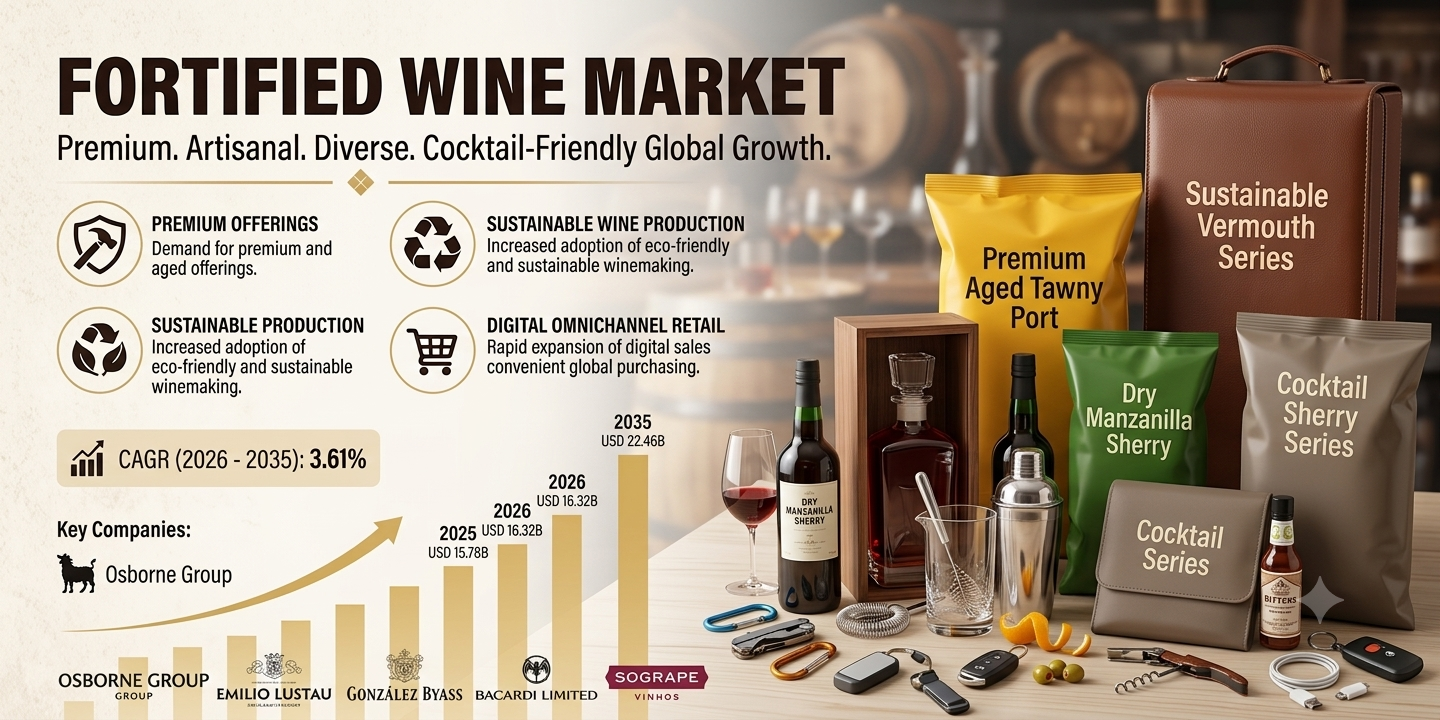
Fortified Wine Market
Fortified Wine Market is evolving with rising demand for premium wines, culinary uses, and innovative products targeting diverse consumer preferences.
Fortified wine continues to attract consumers seeking distinctive flavors, premium experiences, and versatile beverage options.”
NEW YORK, NY, UNITED STATES, August 31, 2026 /EINPresswire.com/ -- The global Fortified Wine Market is entering a period of steady expansion as consumers increasingly explore distinctive wine styles, premium beverages, heritage products, and sophisticated drinking experiences. Fortified wines, which include Port, Vermouth, Sherry, Madeira, Marsala, and other specialty styles, continue to occupy an important position within the broader alcoholic beverage landscape. Their distinctive production methods, layered flavors, longer shelf-life characteristics, and association with traditional wine-producing regions are supporting their relevance among both established wine consumers and newer audiences.— Market Research Future (MRFR)
The Fortified Wine Market is projected to advance at a CAGR of 3.61% during the 2026–2035 forecast period. The market is valued at approximately USD 15.78 billion in 2025 and is expected to reach USD 16.32 billion in 2026. By 2035, the market is anticipated to attain USD 22.46 billion. This gradual increase reflects continued consumer interest in premium and differentiated beverages, evolving cocktail culture, expanding retail availability, and greater awareness of fortified wine varieties outside their traditional markets.
Recent News & Developments:
▪️UK Treasury (Feb 2025): New alcohol duty bands increased costs for 18% ABV wines.
▪️González Byass (Jun 2024): Expanded Tio Pepe En Rama production for specialist retailers.
▪️IVDP (Sep 2023): Reduced Port must authorisation, tightening supply and supporting higher prices.
▪️European Commission (Apr 2025): Issued guidance on wine carbon and ingredient labelling.
▪️Bacardi (Nov 2023): Expanded Martini Non-Alcoholic Aperitivo into 14 new markets.
▪️Wines of South Africa (Jul 2025): Reported stronger exports of Cape fortified wines to the UK and Netherlands.
Premiumization Reshapes Consumer Preferences:
Premiumization is becoming an important influence on the Fortified Wine Market as consumers demonstrate greater willingness to explore beverages that offer differentiated quality, heritage, craftsmanship, and sensory appeal. Rather than viewing wine solely as an everyday beverage, many consumers are increasingly interested in products connected with origin, production techniques, aging, flavor profiles, and brand heritage.
Premium fortified wines can benefit from this shift because several varieties already have strong associations with traditional production and regional identity. Port, Sherry, Madeira, and Marsala, for example, can be positioned around craftsmanship and heritage, while Vermouth can appeal to consumers interested in contemporary cocktails and elevated at-home drinking.
Premium products can also create opportunities for producers to strengthen brand storytelling. Information about vineyards, maturation, blending, historical production methods, serving recommendations, and food pairings can help consumers understand the value behind higher-priced products. As consumers become more knowledgeable about beverages, educational marketing and experiential discovery can become increasingly important in purchasing decisions.
Premiumization also creates opportunities for packaging innovation. Elegant bottles, limited editions, gift-oriented formats, distinctive labels, and visually appealing presentations can enhance the perceived value of fortified wine. These characteristics are particularly relevant in specialty retail, hospitality, gifting, and online commerce, where product presentation can influence consumer attention.
Competitive Landscape:
The Fortified Wine Market includes established producers with expertise across traditional fortified wine categories and related beverage segments. Companies profiled in the market include:
▪️Sogrape
▪️Symington
▪️Fladgate
▪️Campari
▪️Bacardi
▪️González Byass
▪️Lustau
▪️Osborne
▪️La Martiniquaise-Bardinet
▪️Madeira Wine Company
▪️Duca di Salaparuta.
These companies represent a combination of heritage-focused producers and diversified beverage businesses. Their competitive strategies can include portfolio development, geographic expansion, premium product positioning, distribution partnerships, hospitality engagement, and brand-building initiatives.
Established producers have an advantage in terms of product heritage and consumer recognition, while diversified beverage companies can leverage broader distribution capabilities and experience across different beverage categories.
Competition is also influenced by the ability to connect traditional products with modern consumption occasions. Companies that successfully communicate the versatility of fortified wines may be better positioned to attract consumers who are unfamiliar with these categories.
Get Full PDF Sample Copy of Report: (Including Full TOC, List of Tables & Figures, Chart) @
https://www.marketresearchfuture.com/sample_request/3942
Vermouth Emerges as a Key Growth Opportunity:
Among product types, Vermouth is identified as one of the fastest-growing segments within the Fortified Wine Market. Its versatility gives it a distinctive position because it can be consumed independently while also serving as an important ingredient in cocktails. The continuing popularity of cocktail culture is therefore creating additional opportunities for Vermouth producers and distributors.
Modern consumers are increasingly interested in experimenting with drinks at home, recreating restaurant-style cocktails, and discovering ingredients with distinctive botanical and aromatic characteristics. Vermouth fits well within this trend because it can contribute herbal, floral, bitter, sweet, citrus, and spice-oriented notes to different beverages.
The expanding interest in mixology is also encouraging consumers to become more familiar with different Vermouth styles. Bars and restaurants can introduce customers to these products through signature cocktails, tasting experiences, seasonal menus, and food-pairing concepts. This can increase product awareness among consumers who may not traditionally consider fortified wine as part of their beverage choices.
Producers can further benefit by highlighting serving versatility. Vermouth can be presented as a cocktail component, aperitif, or accompaniment to food depending on its style. Such positioning gives the category multiple consumption occasions and allows brands to connect with different consumer preferences.
The growth opportunity for Vermouth is therefore not limited to conventional wine consumption. Its relationship with hospitality, mixology, premium experiences, and home entertaining gives the segment several avenues for continued development throughout the forecast period.
Changing Consumer Behavior Supports Market Expansion:
Consumer behavior is evolving across the beverage industry, and fortified wine producers are adapting to changing expectations. Today's consumers are often interested in discovering products with distinctive identities rather than selecting only familiar mainstream options. This creates opportunities for specialty beverages that can provide unique flavors and cultural associations.
Younger adult consumers are also increasingly exposed to beverage information through digital channels. Social media content, recipe platforms, beverage influencers, restaurant menus, online retailers, and educational videos can introduce consumers to fortified wines that may previously have been unfamiliar.
This digital exposure can encourage product experimentation. Consumers may discover a particular fortified wine through a cocktail recipe, food-pairing recommendation, travel experience, or restaurant visit and subsequently seek the product through retail or online channels. Such discovery-driven purchasing can strengthen demand for specialty categories.
At the same time, consumers are showing interest in premium at-home experiences. Home entertaining, dinner gatherings, cocktail preparation, and curated beverage collections create opportunities for fortified wines to become part of broader lifestyle consumption.
Food Pairing and Hospitality Create Additional Demand:
Fortified wine has a natural relationship with food, making restaurants, hotels, bars, and specialty hospitality venues important channels for market development. Different fortified wine styles can complement desserts, cheeses, seafood, meat dishes, appetizers, and other cuisines, creating opportunities for pairing-focused experiences.
Restaurants can introduce customers to fortified wines through pairing menus and curated beverage programs. Such initiatives can make specialty products more approachable because consumers receive direct guidance on how and when to enjoy them.
Hotels and premium hospitality establishments can also use fortified wines to enhance beverage programs. Aperitif services, after-dinner drinks, cocktail menus, tasting sessions, and special events can create consumption occasions that go beyond conventional wine service.
Tourism can provide another pathway for product discovery. Visitors traveling through established wine-producing regions may encounter fortified wines as part of local culinary culture. Winery visits, tasting rooms, festivals, heritage experiences, and regional food programs can strengthen awareness and encourage purchases.
Fortified Wine Market Segmentation:
By Product Type:
▪️Port: 36.0% share, driven by gifting and aged-tawny demand.
▪️Vermouth: 4.51% CAGR, supported by cocktails and aperitivo culture.
▪️Sherry: USD 2.87 billion, boosted by food pairing and dry-style revival.
▪️Madeira: 9.4% share, driven by culinary and collector demand.
▪️Marsala: USD 1.04 billion, supported by restaurant use.
▪️Others: 3.88% CAGR, led by regional fortified wine styles.
By Category:
▪️Mass: 54.0% share, supported by supermarkets and private labels.
▪️Premium: 4.70% CAGR, driven by aged and specialty offerings.
▪️Key Trend: Consumers are increasingly shifting toward premium products.
By End User:
▪️Women: 52.9% share, supported by sweet and aromatic varieties.
▪️Men: 5.05% CAGR, driven by cocktails and vermouth.
▪️Key Trend: Cocktail culture is broadening the consumer base.
By Distribution Channel:
▪️Off-Trade: 51.8% share, led by grocery, specialty, and online retail.
▪️On-Trade: 3.99% CAGR, supported by bars, restaurants, and hospitality.
▪️Key Trend: On-trade channels are benefiting from renewed social drinking occasions.
Distribution Channels Become Increasingly Important:
Distribution is a critical factor shaping accessibility across the Fortified Wine Market. Traditional channels such as specialty wine shops, supermarkets, restaurants, hotels, bars, and liquor retailers remain important, while digital commerce is providing additional ways for consumers to research and purchase specialty beverages.
Online retail can be particularly useful for products that may not be widely stocked in physical stores. Consumers can compare product descriptions, explore different styles, read reviews, investigate origins, and discover serving suggestions before making a purchase.
Digital platforms also allow producers and distributors to reach consumers beyond their traditional geographic markets. This can be valuable for smaller or heritage-focused brands seeking greater visibility.
Physical retail nevertheless continues to provide important advantages. Consumers can receive recommendations from knowledgeable staff, examine packaging, and discover products through tastings or promotional displays. Specialty retailers can also organize fortified wine selections according to style, origin, flavor profile, price category, or occasion.
An integrated distribution approach can therefore help producers serve consumers across different stages of the purchase journey, from initial product discovery to final selection.
Men Represent a Fast-Growing End-User Segment:
The men segment is identified as one of the fastest-growing end-user categories in the Fortified Wine Market. This development reflects changing consumption patterns and broader interest in premium beverages, cocktail culture, food pairing, and beverage experimentation.
Male consumers increasingly represent diverse consumption occasions, including social gatherings, dining experiences, home entertaining, celebrations, and cocktail preparation. Fortified wine products can address these occasions through different styles and positioning strategies.
Vermouth, in particular, can benefit from the growing overlap between wine and mixology. Port and other fortified styles can also appeal to consumers seeking richer or more distinctive drinking experiences.
Brands can strengthen engagement by focusing on product education rather than relying exclusively on conventional demographic marketing. Information about flavor characteristics, serving temperature, cocktail applications, food pairings, and product heritage can help consumers make informed choices.
The broader opportunity lies in creating inclusive beverage experiences that encourage experimentation and appreciation across consumer groups.
Asia-Pacific Offers Strong Expansion Potential:
Asia-Pacific is projected to be the fastest-growing geographic segment in the Fortified Wine Market. The region presents significant opportunities because changing lifestyles, expanding hospitality industries, increasing exposure to international beverages, and growing interest in premium products are supporting greater beverage diversification.
Urban consumers across several Asian markets are increasingly exposed to global food and beverage trends. International restaurants, hotels, cocktail bars, wine retailers, and digital commerce platforms are expanding access to imported and specialty beverages.
The development of premium hospitality is particularly relevant. Upscale restaurants and hotels can introduce fortified wines through curated menus, cocktail programs, and food-pairing experiences. This helps consumers encounter products in an environment where staff can explain their characteristics and recommend appropriate serving methods.
Cultural adaptation can also influence regional growth. Producers may need to consider local food preferences, drinking occasions, packaging expectations, and consumer education when entering Asia-Pacific markets. Partnerships with local distributors and hospitality businesses can help brands navigate these requirements.
Key Challenges Facing the Market:
Despite favorable opportunities, the Fortified Wine Market faces several challenges. Consumer familiarity remains uneven across regions, with some fortified wine styles better established in traditional markets than in emerging ones. Lack of knowledge about serving methods, flavor profiles, and food pairings can limit trial among new consumers.
Regulatory requirements related to alcoholic beverages can also influence production, labeling, marketing, distribution, and retail operations. Companies operating across multiple countries must adapt to different market conditions and regulatory frameworks.
Another challenge involves competition for consumer attention. Fortified wine competes with a wide range of alcoholic and non-alcoholic beverages. As consumers gain more choices, brands need to communicate a clear reason for selecting a particular product.
Price sensitivity can also influence purchasing behavior. Premium products may appeal strongly to some consumers but remain less accessible to price-conscious buyers. Producers therefore need to balance premium positioning with portfolio diversity.
Future Outlook for Fortified Wine:
The outlook for the Fortified Wine Market remains positive as traditional beverage heritage intersects with modern consumption trends. The market's projected movement from USD 15.78 billion in 2025 to USD 22.46 billion by 2035 demonstrates the potential for sustained development during the forecast period.
Vermouth is expected to remain a particularly important opportunity because of its relationship with cocktails and contemporary drinking occasions. Premium products can benefit from consumers seeking quality and distinctive experiences, while Asia-Pacific offers substantial room for market penetration and consumer education.
Future growth will likely depend on how effectively producers balance heritage with innovation. Traditional production stories remain powerful, but modern consumers also expect convenience, accessibility, engaging digital content, attractive packaging, and versatile serving options.
Hospitality partnerships, premium retail, e-commerce, cocktail culture, tourism, and food pairing can collectively create new consumption occasions. At the same time, producers can strengthen their connection with consumers by explaining the unique characteristics of each fortified wine style.
Frequently Asked Questions?
What is the projected size of the Fortified Wine Market by 2035?
The Fortified Wine Market is projected to reach approximately USD 22.46 billion by 2035, compared with USD 15.78 billion in 2025.
Which product type is expected to grow fastest?
Vermouth is identified as the fastest-growing product-type segment, supported by its increasing relevance in cocktails, mixology, and contemporary drinking occasions.
Which region offers the strongest growth opportunity?
Asia-Pacific is projected to be the fastest-growing geographic segment, supported by expanding hospitality, premium beverage consumption, and increasing awareness of international wine styles.
What are the major fortified wine styles covered?
The market includes Port, Vermouth, Sherry, Madeira, Marsala, and other fortified wine styles across different categories, end users, distribution channels, and geographic markets.
Browse More Reports:
Functional Water Market:
https://www.marketresearchfuture.com/reports/functional-water-market-41880
Functional Protein Market:
https://www.marketresearchfuture.com/reports/functional-protein-market-2330
Functional Mushrooms Market:
https://www.marketresearchfuture.com/reports/functional-mushrooms-market-25605
Functional Chewing Gum Market:
https://www.marketresearchfuture.com/reports/functional-chewing-gum-market-24527
Market Research Future
Market Research Future
+1 855-661-4441
email us here
Legal Disclaimer:
EIN Presswire provides this news content "as is" without warranty of any kind. We do not accept any responsibility or liability for the accuracy, content, images, videos, licenses, completeness, legality, or reliability of the information contained in this article. If you have any complaints or copyright issues related to this article, kindly contact the author above.
